Saturday, May 21, 2011

Massage & Body Oils – 5 Hidden Dangers

It seems so perfectly natural and nurturing to slather your skin with oil. Apart from the silky sensuality of applying it, all oils are good for your skin. Right? Wrong!

What’s the big deal over a bit of oil? Sadly there are many oils sold and used for both body care and massage that are downright harmful. Bad for your skin and bad for your ongoing health. Finding your way through this minefield requires you to think logically and read the label. No label showing all the ingredients? Don’t buy or use it.


Hidden Danger #1: Packaging.

All oils dissolve and break down plastics over time. Some oils do it more quickly and some plastics are more vulnerable than others, but basically, any oil in any plastic packaging is a bad idea. And yes, that applies to cooking oils as well. The plastic molecules dissolve into the oil and then you apply to your skin (or eat) which introduces the harmful petrochemical substances into your bloodstream, digestive system and internal organs.

Hidden Danger #2: “white oil”, “baby oil” or “mineral oil”.

Whatever you call it, “mineral oil” (which goes by a multitude of soft and easy-to-sell names) is a major hazard but is commonly used as the base for everything from baby oil to lots of skin treatment oils that are prettied up by the addition of a little essential oil. Mineral oil is a petroleum by-product and has been shown to increase the risk of a wide range of cancers in addition to triggering asthma, and being causal in non-Hodgkin’s Lymphoma and Leukemia. The US National Library of Medicine has a wide range of studies available to show just how harmful this common ingredient is. Apart from the serious health risks of regularly using mineral oils, they actually dry out the skin over time and compound the very problems you were seeking to fix. So why is it used so widely? It’s mega-cheap, odorless, doesn’t spoil and because we as consumers simply don’t ask enough questions.

Hidden Danger #3: synthetic fragrances.

Synthetic fragrances are concocted from sometimes hundreds of chemical ingredients and preservatives, and the declaration of each and every component is not required under international labeling law. The pretty way to disguise the use of these chemical ingredients is to label them as “fragrance oils”. Lots of “natural” body oil and skin preparations include “fragrance oil” as well as 100% pure essential oils. Why? It’s a backdoor way of using chemical preservatives without having to declare them. And why are synthetic fragrances so dangerous? Many of the component chemicals are what we call “estrogenic”, which means they mimic hormone activity in the body, disrupt normal hormone function and actually contribute to the development of estrogen-dependent cancers.

Hidden Danger #4: Heat Extracted Oils.

Oils are composed of long-chain fatty acids which are damaged by heat. The little bits that break off the long-chain fatty acids are toxic to the body and are also easily absorbed into the skin and bloodstream. So while cold pressed virgin coconut oil is wonderfully nourishing and healing, heat extracted coconut oil isn’t. How do you tell? Usually the heat extracted oil has a smell. Cold pressed sesame or sunflower oils have no smell at oil, whilst the heat-extracted oils have distinct odors. Heat extracted coconut oil smells like toasted coconut. As a rule of thumb, if the bottle doesn’t scream “cold pressed” to justify the much higher price, it isn’t.

Hidden Danger #5: Rancid Oil.

Rancid oil is basically oil that has is spoiled. Some oils, like sunflower oil, become rancid very, very quickly and will contaminate and spoil any oils they are blended with, causing them to spoil too. Storing many oils without refrigeration or in direct sunlight will cause them to go rancid quickly. Olive oil, for instance, needs to be stored below 30C and protected from exposure to light. That’s why good olive oil always comes in green or brown glass bottles. Notable exceptions are oils like rice bran and sesame, that are very stable under heat. How can you tell if oil is rancid? You can smell it. If it has that funky “old oil” smell, toss it. When oil becomes rancid the same process occurs as when it is heat extracted, leaving small unstable parts of the fatty acid chains in the oil which are then absorbed into your skin, vital organs and bloodstream.

So, what should you be looking for? A natural plant based oil packed in glass or aluminum. No “fragrance oils” – just pure essential oils to add natural scent. Good labeling that shows all the ingredients. A best-before date. And make sure it passes the “sniff” test.

Nourish and nurture your skin with healthy, natural oils and your skin will glow. As you reduce your exposure to chemicals and inferior oils, your body will regain balance and your health will blossom. Toss the petrochemical based lotions and aim for a light coating of easily-absorbed plant based oil every evening before bed. Enjoy the nourishing sensuality and make sure you share that feeling with someone you love whenever you can.

www.arunthainatural.com

Thursday, April 14, 2011

4 Natural (& Really Nice!) Ways to Prepare for Pregnancy

Growing a baby is a big job, no question. And like all big jobs, planning and preparation make a huge difference to the outcome. That’s true whether you’re having difficulty conceiving a child and are trying to increase your chances or whether you’re simply committed to providing the best and cleanest living and growing environment possible. Pregnancy preparation is important. Physically, mentally and spiritually.

There’s already more than enough written about the pre-pregnancy diet: what foods to avoid and what you should choose to eat. There’s a lot written about yoga and exercise to prepare a lean, strong, supple and flexible body that will manage the challenges of pregnancy and birth. There’s even a little bit out there written about colon cleansing pre-pregnancy to help detox your body.

So, are many women actively preparing pre-conception as a result? Sadly, apart from throwing away their contraceptives and any lingering dreams they may have had of extensive global travel, wealth and loads of personal “me” time, not really. Why? Many women simply feel it’s too hard, too challenging, “too much” and not achievable or enjoyable in the space of their stressed and busy lives.

Preparing for pregnancy doesn’t have to be onerous or difficult. Sensibly reducing your toxin load diet-wise, adding some super foods each day and starting to practice some simple yoga stretches is manageable for even the busiest woman. But did you know preparing for pregnancy can even be downright pleasurable, relaxing and fun? Smiling yet?

We learn two basic facts in high school science when we are about 13 years old, and then promptly seem to forget or sidestep this knowledge for most of the rest of our lives. (i) everything in the body works better when blood, lymph and energy are moved and stimulated and (ii) our skin is by far our largest detoxing organ.

How can we use those two simple facts to help prepare well (and enjoyably!) for pregnancy?

1. Regular therapeutic massage during your pregnancy preparation phase will have a noticeable effect on your overall health. Ask for a Thai massage, a hot Thai Herbal Massage Ball treatment or a real detoxing/lymphatic stimulating massage rather than a few touchy-feely strokes with a bit of oil. Try to breathe with the therapist during the massage and visualize your body shifting and releasing all that it does not need. Ask your therapist to use only a natural plant-based oil to make sure no extra petrochemicals find their way into your bloodstream at the time you least want them.

2. Indulge in a herbal steam. Actually, any steam or sauna treatment that encourages sweating and the release of toxins through the skin is good. A steam treatment is less harsh and drying for your skin than a sauna, and a herbal steam simply adds the benefit of healing and detoxing herbs in the most pleasurable way. Try to steam before and after your massage for optimal benefit.

3. Use herbal clays, scrubs and oils to encourage the release of toxins through your skin. The more that is released through the skin, the easier the job for your liver, kidneys and other organs to help cleanse your blood. Clean blood and clean organs mean optimal hormone function in the body, which is exactly what you want for conception and pregnancy.

4. And finally, nourish your skin from the outside with plant-based oils to ensure optimal moisture, resilience and elasticity before it becomes weight bearing. Preventing stretch marks is way, way smarter than trying to heal and repair them later when the damage has been done.

So, how does that look in summary? Massages, herbal steams, natural skin treatments and loads of plant-based nourishing oils. Are you smiling yet? Yes, all pleasurable and good for you and your new baby.

How long would I recommend you prepare pre-pregancy? I would say 9-12 months is optimal, but even

3 months can be beneficial. The better shape you are in before conception, the easier and more pleasurable the process will be.

Be well, relax and focus on enjoyable and positive pregnancy preparation – a smiling pregnant mom transmits important “happy hormones” to a baby that encourage optimal growth and development. So it really is true: what’s good and enjoyable for you is good and positive for your baby.

Enjoy the journey of creating a new life – a truly magical and wondrous adventure.


Tuesday, November 9, 2010

Climate Change Killing the Thai Coconut Culture

Somehow you’d think that the day something as big and important as climate change started eroding the ancient Thai culture, that someone would have noticed or reported it or something. Sadly not. It strikes me that the huge changes in our lives and cultures do often go unremarked.

Before I explain how climate change is already having a huge impact on Thai diet, environment and natural medicine, I need to fill you in on a few basics about Thailand and coconuts. You don’t need to have ever been here to equate a coconut tree with Thailand and tropical bliss. Every Thai market has at least one coconut shop – “raan grati” – where they grind up the coconut meat to make coconut milk and sell various coconut products. Coconut milk is used extensively in everything from sweets to curries, and coconut oil has been used for centuries for cooking. It’s only in recent years that the incredible nutritional and skin benefits of cold pressed virgin coconut oil have been researched and publicized. But the wise Thai grandmothers always knew that. Traditional Thai medicine has always used coconut oil as a base for “ya mong” – the therapeutic herbal balms used for massage, headaches and natural healing. Sadly, in recent years, vaseline has become the “ya mong” base of choice among many Thai people because it is cheap and easier than blending hot coconut oil and wax. But Arun Thai Natural still uses and celebrates the basic methodology and ingredients – starting with coconut oil and beeswax – that have been known here for centuries.

One more bit of background you need to understand. Coconut oil is produced in 3 basic ways. (1) Virgin cold pressed, which is made under pressure and preserves the long-chain fatty acids, yielding a totally clear, fragrant healthful oil which solidifies at about 21C. Low yields and a corresponding substantial price. (2) Heat extracted coconut oil which is almost clear, also highly fragrant in a slightly more toasted way, but lacks the same quality of long chain fatty acids and is therefore higher in free radicals. High yields and a very fair price. (3) Chemically extracted coconut oil which is very, very cheap, a golden yellow colour and is often used as a massage oil base; even the unscrupulous vendors here sell it with a verbal warning, “No eat! Dangerous!”.

Arun Thai Natural sells virgin cold-pressed coconut oil and also uses it to make our Care+ Body Treatment Oil. But for our “ya mong” massage balms, foot balms and lip balm, we use the highest quality heat extracted coconut oil, since we have to heat it anyway to melt the wax into it and there is simply no value in using the cold pressed oil. We also use the heat extracted coconut oil as the base for our Phlai (warming) and Ginger Cassia (cooling) Traditional Massage Oils because, you guessed it, we make them the traditional way which involves heating the oil and therefore makes the cold-pressed oil a non-option.

So the last 7 weeks have been a total shock and mystery in our little Thai world. No heat-extracted coconut oil to be found, anywhere in Chiang Mai. For the first three weeks we thought our suppliers were just being very Thai about their ordering at the end of a long slow rainy season – cash strapped, unwilling to invest in new stock and fibbing a bit. Then came the stories from all the various suppliers, vendors, shops and agents we visited and talked to. The floods. No transport. Too expensive. Coconuts “paeng” (expensive) at the end of the rains. Now we do experience this little price glitch at the end of every rainy season, where the price of all things coconut goes up a bit, only to fall again, but it has never resulted in a complete drying up of supply all over Thailand’s second biggest city.

Now you also do need to appreciate that although coconut trees grow everywhere in Thailand, the trees in the north here don’t produce nearly as much oil due to it being less tropical and more temperate, so the northern coconuts are pretty much worthless for oil extraction. 95% of all Thai coconut production comes from the area just a bit south of Bangkok, with the real hub being located around Chumpon and Prachuap Khiri Khan. Now this area has just been hit by flooding issues from two sides. Massive water run-off from the north and north east, which collides with the two highest king tides of the year. Huge parts of Thailand have, in the last weeks, sustained the heaviest flooding in 50 years.

There have been articles in the papers in the last month suggesting that in as few as 7 years, large parts of Bangkok will be submerged. Being Dutch, knowing the power of the sea and also having seen the flood devastation this rainy season, I think that is beyond possible and moving towards likely.

Determined to get to the bottom of the coconut oil supply issue, we hit the road and the phones today to get past the frustrating veneer of Thai politenesses, excuses and downright lies. I schlepped through 3 different major markets to eyeball and confront the suppliers and vendors while Naa, my production manager, sat on the phone to growers and factories in Chumpon and Phrachuap Khiri Khan and also to the distributors of their products in the north.

And the story we finally pieced together is a sobering one. The coconut tree growers have been devastated by the floods, which are not yet fully receded. They are estimating 25-50% of their trees to be damaged to the point of them needing to be removed. They are not yet able to calculate how much can be salvaged. The growers and factories therefore, are using the fruit they have to obtain the highly profitable virgin cold-pressed oil (for that we are very thankful!) and then heat processing the dregs to produce the abundant chemically derived product, which is so awful we don’t even want to know about it. The volume of fruit left for heat extraction has shrunk enormously, resulting in a wholesale price hike of over 130% in the last week alone, and continuing to climb. The vendors in Chiang Mai are unwilling to buy this much pricier product and so have been fudging and fibbing and simply not ordering it in. And they’re not going to change that. Nearly every vendor I spoke to argued the benefits of palm oil - price and availability. The other Thai herbal product makers are embracing palm oil with open arms as an alternative to coconut oil – the vendors could not understand why Arun Thai Natural is vehemently opposed to and won’t ever be using palm oil.

So this afternoon we sat down and made some decisions. We will discontinue the use of heat treated coconut oil in our balms and traditional massage oil products, and substitute a mix of the used-to-be-more-expensive rice bran and cold pressed sesame oils instead. They are much better quality oils and, in combination, will produce a much smoother and richer product. Previously we have erred on the side of tradition and the price difference had been such as to support that choice. But because Arun Thai Natural is growing fast and we are producing more product, we will be able to buy our oils in greater volume and therefore should be able to hold our current pricing.

I should be delighted, and at one level, I am. Circumstance has pushed Arun Thai Natural to increase product quality, albeit in a way that moves us a little bit further away from the traditional Thai roots that we celebrate and cherish. But I can’t help feeling a little bit sad about the demise of the coconut culture. A couple of days ago I tried to order a fresh coconut for my daughter, Ploi, at a restaurant and was told “no have – too expensive”. Unthinkable.

Realistically, the Thai government lacks the resources and the funding to address the massive infrastructure issues that are needed to offset rising sea levels, subsidence and flooding from the north each season. In 10 months time, the remaining coconut trees will get another dose of very wet feet and another nail will be driven into the coconut culture’s coffin. Some climate and engineering experts predict as few as 7 years before parts of Bangkok will need to be evacuated. I wonder what the price of coconuts and coconut oil will be in 7 years time….? I wonder how much more pristine Asian jungle will have been slashed to plant more palms for palm oil, and how many species will have lost their habitat and be on the brink of extinction.

Sustainable. It’s an easy marketing word to toss about but today Arun Thai Natural came hard up against what that means. We think it means we have to change to protect the world we live in, and we’re ready to do that. We are even happy about the better quality product that we will be able to offer. But we’re just a bit sad about climate change and the end of the Thai coconut culture.

Wednesday, October 27, 2010

You want me to rub WHAT over my body? WHY?

No, it’s not just a girl-thing and no, it’s not about just looking lovely and having glowing skin, although that’s a pleasant side effect. What are we talking about? Exfoliating. Ex… what? Exfoliating. The process of rubbing something mildly abrasive over your skin to remove dead skin cells and improve circulation. “Don’t dead skins cells fall off all by themselves?” I hear you asking. Well yes, they do. Eventually. But before they do they clog up the skin’s natural elimination processes and reduce the body’s ability to sweat effectively and release toxins.

The skin we’re in isn’t just a wrapper to hold all the bits together. Our skin is involved in a huge range of bodily processes that all combine for good health. Our skin is the largest elimination organ in the body, efficiently removing waste; it regulates body temperature, engages us with the world around us through touch, prevents infection and enables our bodies to absorb sunlight and produce important nutrients like Vitamin D. Making sure your skin functions at its best means that all those bodily functions will also function at their best.

In many ancient cultures, coarse salt or sand are used for exfoliation. Both are great but in the modern bathroom tend to play havoc with your drainage. If you do use coarse salt, you’ll need to pour a lot of hot water down the drains afterward to make sure it dissolves fully and doesn’t form a solid layer in your pipes.

If you use one of the many loofahs, mits or scrubbers on the market, please be aware that they bring a hygiene risk after the first use unless you boil them. Sitting damp in your bathroom for days on end and being full of dead skin cells and bacteria isn’t so great - the next time you use it, if you have even the slightest nick or cut on your skin, you risk infection. Brushes are good and can be used on the skin wet or dry, but also need cleaning after each use like a loofah or mit. Or you can use our new Clay Exfoliating Tablet – a bit like a big piece of soap but made from fine white unfired clay. It exfoliates gently and you also have the benefit of the clay helping to draw impurities out of the skin.

How hard should you scrub? Definitely you are aiming for nothing more than the slightest pink glow afterwards. Exfoliating is much easier after a soak in the bath or a longish shower, which softens the dead skin cells and makes them easier to remove. Be aware that areas of the body with poorer blood circulation, like outer thighs, knees, elbows, buttocks, feet etc, tend to have greater dead-skin build up and need exfoliating more often.

After exfoliating, dry yourself off and apply a natural plant-based oil all over. Why? The plant-based oil will nourish new skin, hopefully (depending on oil quality) add antioxidants and natural vitamin E to your skin and help to keep it soft, moisturized and also offset any dryness or irritation.

Think about adding regular exfoliation to your normal self-care regime for better health. Guys, that means you too! Stimulating your skin’s blood circulation and cleaning away the old dead skin cells is not unlike cleaning the filtration in your swimming pool or airconditoner. Everything works more efficiently afterwards, and you have the added benefit of glowing, smooth skin that is a pleasure for you, and others, to touch.


Tuesday, October 19, 2010

Toxic Romance?

Picture this…. It’s the ultimate evening after a nice intimate meal, cooked together and shared. You wander slowly upstairs and pause for a smooch on the landing. You take your time undressing and playfully quibbling about whose turn it is to be massaged. The massage oil is ready and you lean over to light the candle.

STOP. At this point the romantic evening has the potential to become very, very toxic.

How? Firstly, your massage oil. Unless you are using a premium, natural massage oil that has been correctly stored, chances are the stuff you’re about to slather on with such loving strokes will harm both you and your partner as it is absorbed into your skin. Synthetically fragranced oil is made using cheap, nasty and toxic chemicals. Lots of people don’t even know the oil they are using is synthetic. Rule of thumb? Unless it specifically says “essential oil” on the bottle, it’s a 99% chance to contain synthetic fragrance. A key word to be aware of is “fragrance”. In the cosmetic labeling industry, “fragrance” oil is synthetic. Also, the base oil. Most plant oils from cooler countries, like almond or olive, need to be refrigerated or stored under 30C and become rancid quickly. If they have not been correctly stored, they contain huge amounts of damaged fatty-acid molecules which are absorbed into your skin and then happily travel about inside your body through your blood and vital organs, creating havoc.

Another bit of terminology to be aware of is “mineral oil”. Basically it means “petrochemical waste that has been tidied up a bit”. Your kidneys and liver do not need little bits of bio-diesel waste ending up clogging your body’s filtration and waste management system! And the third thing you need to be aware of with commercial massage oils is that most mass produced vegetable base oils come from genetically modified crops. We do not yet know what this will do to our chromosomes or the DNA of our children’s children.

The other big romance killer – literally – is probably the candle. The lead-dipping of candle wicks encourages slow, steady burning and is still commonly practiced. Lead or chemically treated wicks are often quite thin in relation to the candle, whereas in a natural beeswax candle, an untreated cotton wick gets progressively thicker as the candle does. It has to, so that the wick is able to consume the greater volume of melted wax. If your candle is synthetically colored or artificially scented, the burning process will release those volatile chemicals into the air of your boudoir and they will end up in the lungs and bloodstream of you and your beloved.

But even more significantly, most commercially produced candles are made either largely or solely from paraffin. Why? Because it is the cheapest wax. What does burning paraffin discharge into the air? The smoke from paraffin wax emits significant doses of pollutants including benzene, toluene and ketones, which have been linked to cancer, asthma and birth defects. Suddenly I’m not feeling so romantic anymore. Even so-called beeswax candles are often blended with paraffin to reduce production costs.

So, what to do? Cancel the romance and soak up a bit of radiation and “dirty electricity” in front of the television? Heavens no! We all need romance and the healing energy of shared touch.

Make sure that your massage oil is produced from high quality plant oil with good shelf life that does not require refrigeration. ~ Shudder ~ … at the thought of cold oil being dropped onto my warm skin. Make sure it is not synthetically fragranced and contains no coloring agents. Arun Thai Natural Aroma Body Oils are made from rice bran oil, which is the most stable oil under heat of all known plant oils and has a shelf life of 18+ months without refrigeration. We make our oils using only 100% natural, pure essential oils and we use no coloring agents whatsoever.

Look for 100% pure beeswax candles, preferably in flame-proof containers. The amazing thing about burning a beeswax candle is it actually purifies the air while you burn it. Make sure it has a substantial, thick non-treated cotton wick and ensure you buy only candles that are fragranced with 100% pure essential oils. Arun Thai Natural will be releasing pure 100% beeswax candles in the coming weeks to add to your natural massage and natural romance experience.

Bring back the romance in your life… and in that process, make sure you are protecting your health and the health of your loved one. Cuddle. Massage. Snuggle away. Enjoy.

Thursday, October 7, 2010

Ingredient Insight: Menthol

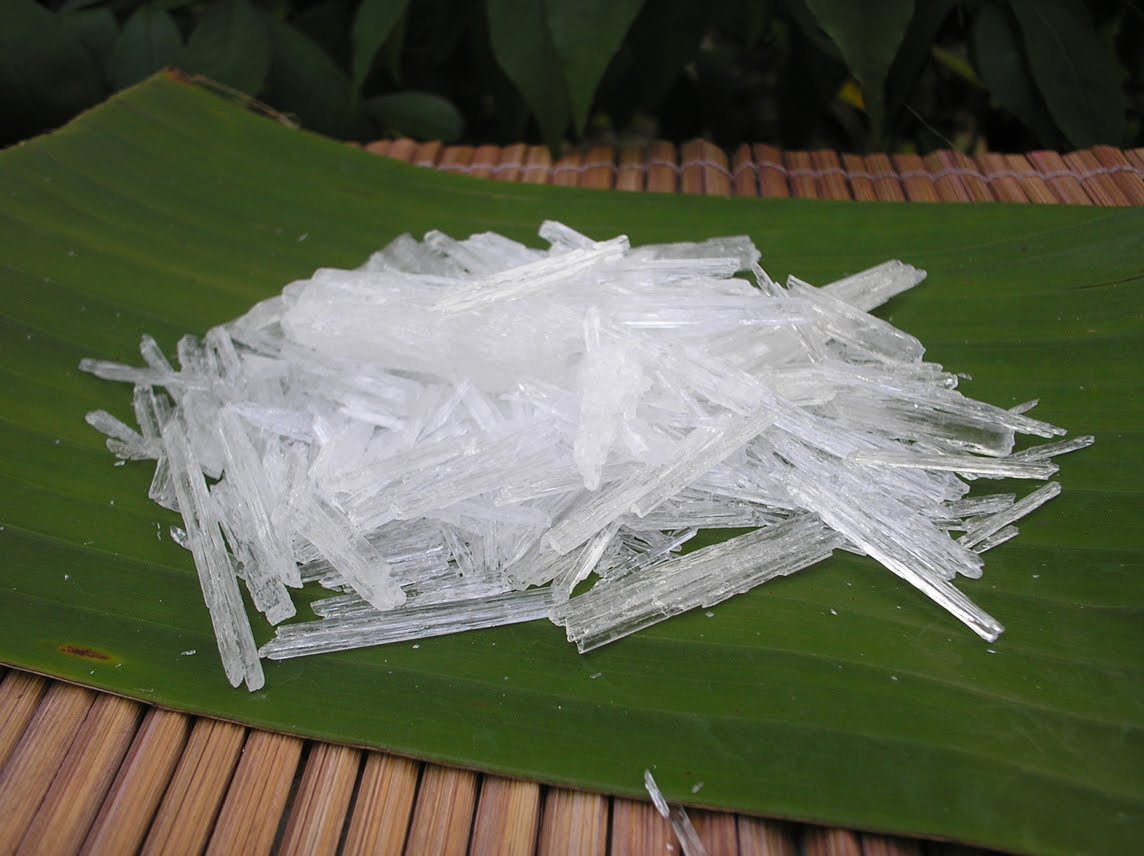
We can mostly all conjure up the smell of menthol, or its taste, but do we really know what it is or what it looks like in its natural form?

Menthol is an organic compound extracted from peppermint or other mint oils. It is sold in its crystalline form and melts just slightly above room temperature (ie when you touch it). It looks like shards of glass or broken crystal and has the most beautiful fragile tinkling sound when you shake it out of the bag. Mentha arvensis is the primary species of mint used to make natural menthol crystals. It was first isolated from peppermint oil in 1771 in the West, but has been widely known and used in Asian medicine for far longer.

Menthol is to the cold sensation what capsaicin (extracted from chilies) is to hot. It triggers cold-sensitive TRPM8 receptors in the skin which gives a cooling sensation when inhaled, eaten or applied to the skin, without causing an actual change in temperature.

Menthol has analgesic (pain relieving) properties and helps to relieve skin irritations, sore throats and nasal congestion. It is also used to treat sunburn, fever and muscle aches. When menthol is used orally, it is used in the form of peppermint oil, and is widely used in toothpastes, cough medicines, lip balms, mouthwashes, chewing gum and cigarettes.

In traditional Thai and Asian medicine, menthol is used for nausea, diarrhea, indigestion, headache, colds, sore throat and muscle pain. Commonly in Traditional Thai Massage, menthol is used in conjunction with camphor.

Arun Thai Natural uses menthol in Phlai Traditional Thai Massage Oil and Beeswax Balm (warming) and Ginger Cassia Traditional Thai Massage Oil and Beeswax Balm (cooling).

Tuesday, September 21, 2010

It's Organic....?

A lot of people want to see an “organic” label on a product, often without knowing what that really means. It makes them feel secure, confident of the natural quality… safe. You could argue that it frees the consumer from having to think. From a manufacturer’s or seller’s viewpoint, the “organic” tag is one excellent way to boost sales and gives permission to charge a premium price.

The “organic” tag actually means very little, while the “certified organic” tag is exceptionally difficult for a manufacturer to attain, and also varies from country to country in what it means.

The simplest, most general explanation of the certified organic criteria for food is, as one might expect, to be found in wiki:

All fresh and processed foods must follow national organic production standards and be certified by a USDA-accredited inspection agency. Only approved materials can be used in the production. No material can be used that harms the life of animals, people, or soil.

Specifically, organic farmers can't use antibiotics and growth hormones, fresh manure, genetically engineered materials and seeds, irradiation, sewage sludge, and toxic synthetic fertilizers and pesticides. Neither can they confine animals. So, for example, hens must be cage free.

A farm management plan must be in place. Detailed records must be kept. The USDA accredited inspection agency must carry out yearly inspections.

The devil is always in the detail: the farm management plan requires that there be a specified area of land as a buffer zone anywhere aerial or power spraying is used, and that area can be up to 100m or more depending on the geography. Special drainage needs to be in place to ensure any run-off water isn’t contaminated by pesticides used on neighboring properties. Water supply needs to be certified to ensure it is not contaminating plants.

In Asia, particularly due to small land-holdings, monsoonal flooding and the inability of the law to control the activities of one’s neighbors, certified organic status is virtually impossible to obtain. Those few people who have it are, almost by definition, the big, rich landholders. Doesn’t seem to bother a lot of people though, who still happily slap “organic” on everything to boost sales.

But that’s about to change.

Whole Foods Market in the USA, the largest chain of “natural” stores anywhere, recently made sweeping changes to their policy about “organic” body and personal care products. As of June 2011, they require any product claiming to be “organic” to be certified to the equivalent of USDA standards. They estimate 80% of the body care products currently labeled and sold in their store as “organic”, isn’t, and they require those manufacturers to re-label or to withdraw products from their stores.

http://blog.wholefoodsmarket.com/2010/06/organic-labeling-for-body-care/

Will it affect Arun Thai Natural? Not at all. We have never claimed to be “organic” and have resisted the temptation and requests of various customers to put pretty little “organic” stickers on our products. Our stickers tell it like it is: 100% natural. Our herbs don’t need pesticides or fertilizers, since they grow easily and naturally in their indigenous habitat. But our farmers do use animal manure and no, we can’t control that the manure came from an organically fed pig. And we have monsoonal rain that washes things into the canals used to irrigate farms. And our Thai farmers are gracious and honorable about their tolerance in allowing other people the right to do what they want on their own land, but in practice this means their neighbors might spray and use chemicals, even if they don’t.

So we don’t and can’t claim to be organic. Unlike the vast majority of “natural” body care producers.

Ironically Arun Thai Natural products could happily line up with the best of them at Whole Foods Market, because we don’t claim to be something we’re not. Most of what is labeled as “organic” isn’t, because if it really was they’d be “certified organic” and flaunting it. Buying “certified organic” almost by definition means you are buying from the richest and most privileged of land-holders. And it does little to redress the balance of power in global farming, which rewards the few that have education, lots of land and money.

Next time you’re out to buy natural products, please think about these issues. Don’t buy into the slick “organic” marketing hype and realize that it, too, shall mostly pass away as people like Whole Foods Market start insisting on integrity from their suppliers. Support the honest little guys who don’t lie to you. Think for yourself. Make that most political act (shopping) count not only for yourself and for your health, but for global equity and the farmers fighting to feed their families across the developing world.